
Staff writer, with CNA
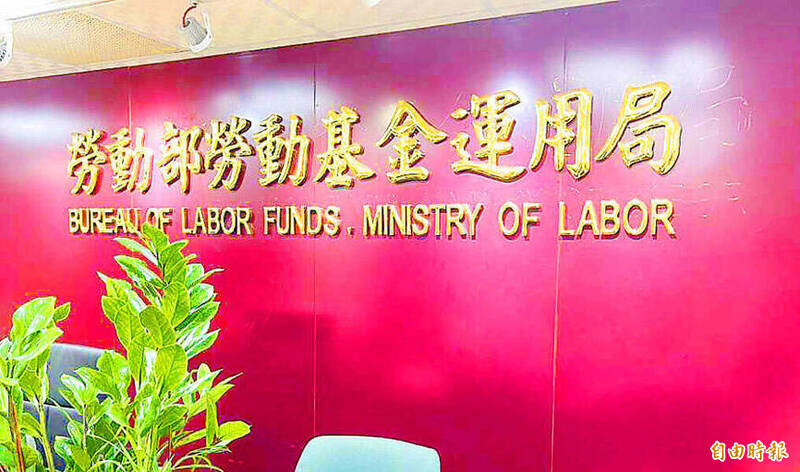
Taiwan’s labor funds posted a combined investment gain of NT$2.4 trillion (US$73.64 billion) in the first nine months of this year, for a 30.73 percent rate of return, the Bureau of Labor Funds said yesterday.
The funds generated NT$117.8 billion in September, remaining in positive territory despite heightened volatility in global financial markets, the bureau said.
As of the end of September, the labor funds had NT$9.21 trillion in assets under management and cumulative investment gains of NT$2.44 trillion, the bureau’s latest report said.
The Labor Pension Fund under the new pension system, the largest with NT$6.06 trillion in assets, posted a 30.43 percent return, while the old pension fund, with NT$1.21 trillion in assets, recorded the highest return at 44.16 percent, the report showed.
The Labor Insurance Fund, with NT$1.68 trillion in assets, posted a 27.14 percent return, and the Employment Insurance Fund, with NT$190.2 billion in assets, returned 2.73 percent, it said.
The Occupational Accident Insurance Fund, with NT$38.7 billion in assets, posted a 1.51 percent return, while the Wage Arrears Payment Fund, with NT$26.9 billion in assets, returned 17.33 percent, it said.
The bureau also manages the National Pension Insurance Fund on behalf of the Ministry of Health and Welfare and the Farmers’ Pension Fund for the Ministry of Agriculture, which posted returns of 29.57 percent and 40.72 percent respectively, it reported.
Escalating tensions in the Middle East pushed up global energy prices, fueling inflation concerns and clouding the global economic outlook in September, the bureau said.
US Federal Reserve interest rate hikes strengthened the US dollar and pushed US Treasury yields higher, adding to uncertainty in global financial markets, it added.
Global equities turned in mixed performances in September, with some markets undergoing valuation corrections, although artificial intelligence (AI)-related stocks continued to provide support, the bureau said.
In Taiwan, robust demand for semiconductors and the AI supply chain helped keep the benchmark stock index at elevated levels, although the gains were concentrated in a handful of large-cap technology stocks, reflecting an increasingly uneven market, the report said.
Despite persistent challenges due to geopolitical tensions, inflationary pressures, and tighter monetary policy, the bureau said it would maintain a prudent investment strategy focused on generating stable long-term returns.
新聞來源:
TAIPEI TIMES